Pitigliano, Sovana, and Sorano: Three Tuff Towns in Southern Tuscany
The three towns are within 15 kilometres of each other and share the same volcanic stone, the same Etruscan roots, and a lot of the same history. Each one is distinct.
The three towns of Pitigliano, Sovana, and Sorano sit within 15 kilometres of each other in the southern Maremma. They are built from the same volcanic tuff, on the same type of cliff, above the same river valleys. The Etruscans were here before the Romans. The Aldobrandeschi lords held this territory for roughly five centuries before the Orsini arrived, and the Orsini built the fortresses that both Pitigliano and Sorano still carry. After the Orsini came the Medici.
The three towns are usually described together because they make sense together. Each is distinct. Pitigliano is the largest and the most visited, with a Jewish quarter that is unlike anything else in this part of Tuscany. Sovana is the smallest and the quietest, with one of the best Etruscan sites in the region on its doorstep. Sorano sits between them, the least written-about of the three and, for that reason, often the one people remember most.
This post covers what to see in each town and what it takes to visit all three.
Pitigliano
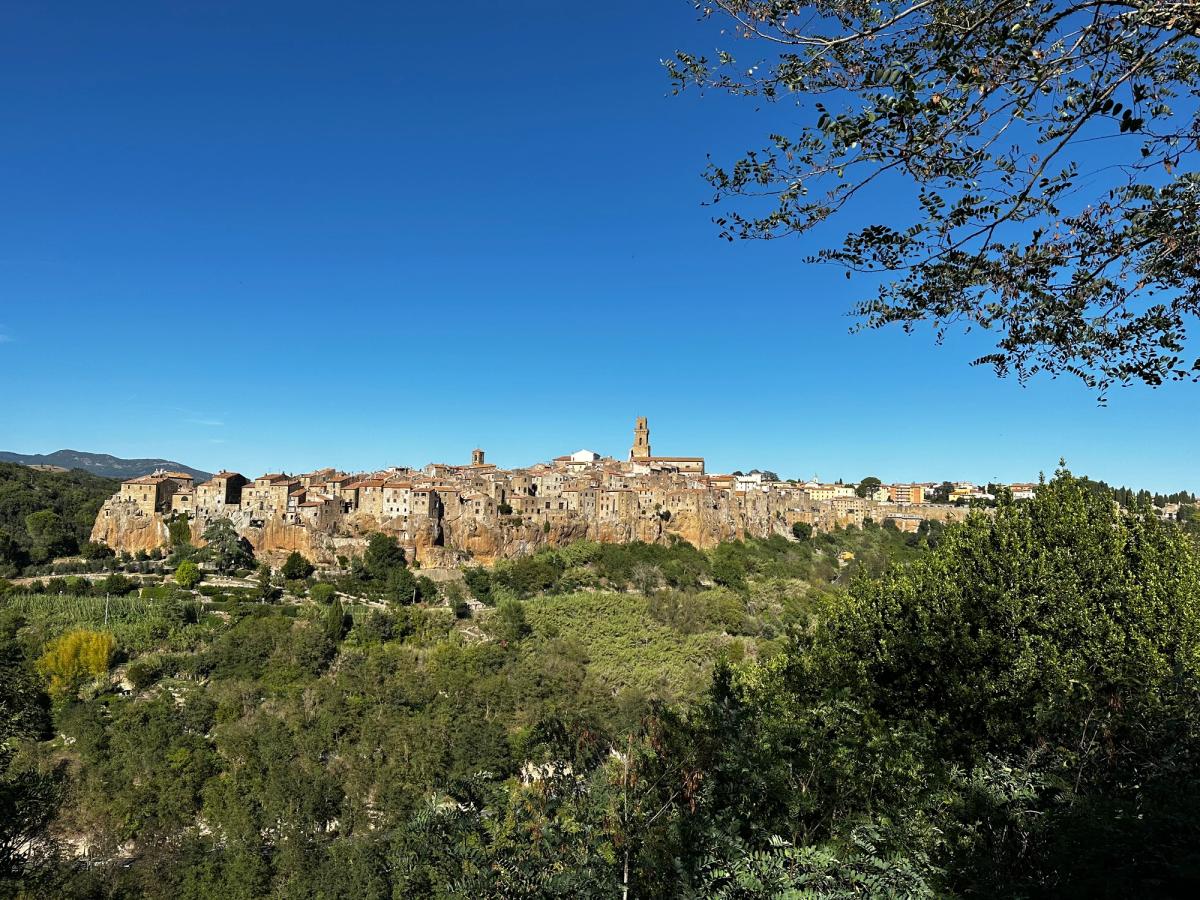
From a distance, Pitigliano looks structural rather than possible. The town sits on a tuff ridge at 313 metres, with the walls and buildings of the medieval centre rising directly from the cliff face. The stone and the architecture are the same colour, the same material. Below, the Lente and Meleta river valleys cut through the terrain on either side.
The Aldobrandeschi ruled Pitigliano for roughly five centuries. Then the Orsini took it in the 14th century, and the Orsini presence explains the two largest structures you see today: the Palazzo Orsini at the western entrance to the town, and the aqueduct that runs along the southern edge.
The Acquedotto Mediceo
The Medici aqueduct was built between 1636 and 1639, commissioned by the Medici Grand Dukes to bring water into the town. It was the first aqueduct constructed in the Maremma. The structure is made from local tufa: two large arches followed by thirteen smaller ones, built into the southern walls of the town. It runs alongside the approach road into Pitigliano and is worth stopping to look at before entering the gates.
Palazzo Orsini and the museums
The Palazzo Orsini was built and repeatedly extended by the Orsini family between the 15th and 16th centuries. Today it houses two collections: the Civic Archaeological Museum, with Etruscan and medieval finds from the surrounding area, and the Palazzo Orsini Museum, which covers the history of the building and its owners.
A single ticket covers both collections. Full price is €5; reduced is €3.50. Hours vary by season. In summer, the museum is open 10:00 to 13:00 and 15:00 to 18:00 (to 19:00 some days). In August it stays open 10:00 to 20:00 daily. The museum is closed on Mondays throughout the year.
La Piccola Gerusalemme
Pitigliano has had a Jewish community since at least the 15th century, large enough that the town became known as La Piccola Gerusalemme: the Little Jerusalem. The ghetto was largely abandoned after the Second World War and restored for visitors in 1995. Today it functions as an open-air museum, with routes through the synagogue, the oven where unleavened bread was baked, the kosher wine cellar cut into the tuff, the butcher's shop, the purification bath, and the dry cleaners. What makes it worth the visit is not the explanation but the spaces themselves. They are small, specific, and intact.
Tickets cost €5. In summer (April to September), hours are 10:00 to 13:00 and 14:30 to 18:00. In winter (October to March), the site opens 10:00 to 12:00 and 15:00 to 17:00. The site is closed on Saturdays and Jewish holidays. Guided tours run on specific dates and require advance booking. Contact: 0564 614230 or lapiccolagerusalemme.it.
The Cathedral of Saints Peter and Paul
The cathedral at the centre of Pitigliano was founded in the 13th century. The bell tower was added a century later. The facade and interior received their Baroque treatment in the early 18th century. The facade is divided by four pilasters, with statues of Saints Peter and Paul set into niches and a Carrara marble relief in the tympanum above. The 16th-century travertine portal is still the main entrance. Inside, the three-nave interior holds paintings and sculpture from several periods, including Francesco Vanni's Madonna del Rosario, painted in 1609 and hanging immediately left of the entrance.
Entry is free.
Sovana
Sovana is 15 kilometres from Pitigliano and 10 kilometres from Sorano. It is the smallest of the three towns and the quietest. The medieval centre is one street, the Via del Pretorio, running from the ruins of the Aldobrandeschi fortress at one end to the cathedral at the other. It takes about twenty minutes to walk at a normal pace, which means you will walk it several times.
Santa Maria Maggiore
On the Piazza del Pretorio stands the church of Santa Maria Maggiore, which dates to the 13th century. The plan is Romanesque; later construction added Gothic elements. The most significant object inside is the ciborium, a pre-Romanesque structure attributed to Comacine craftsmen from the 9th century and considered the only surviving example of its type in Tuscany. A fresco from 1508 depicts the Madonna and Child flanked by saints. The rib-vaulted ceiling is intact.
Opening hours and entry fees are not posted online — check locally before your visit, or ask at the municipality of Manciano.
The Etruscan Necropolis
At the edge of Sovana, the Parco Archeologico delle Necropoli Etrusche is the most complete Etruscan burial site in the Maremma. The tombs are cut directly into the tuff cliffs and most remain largely intact. The centrepiece is the Tomba Ildebranda: a 3rd-century BC temple-tomb with columns, pilasters, and a stairway still standing. It is one of the better-preserved Etruscan monuments in Tuscany, and the reason most visitors make the drive.
The park is open daily from 10:00 to 19:00 (last entry 18:00), April through September. It is closed on Wednesdays, except in August and on public holidays. Guided tours depart at 11:00 and 17:00. A single ticket costs €2. The combined Città del Tufo ticket at €10 covers this site along with the Orsini Fortress in Sorano, the Museum of San Gregorio VII, and the Archaeological Museum of San Mamiliano. If you are spending more than a day in the area, the combined ticket covers the main sites across all three towns.
Sorano
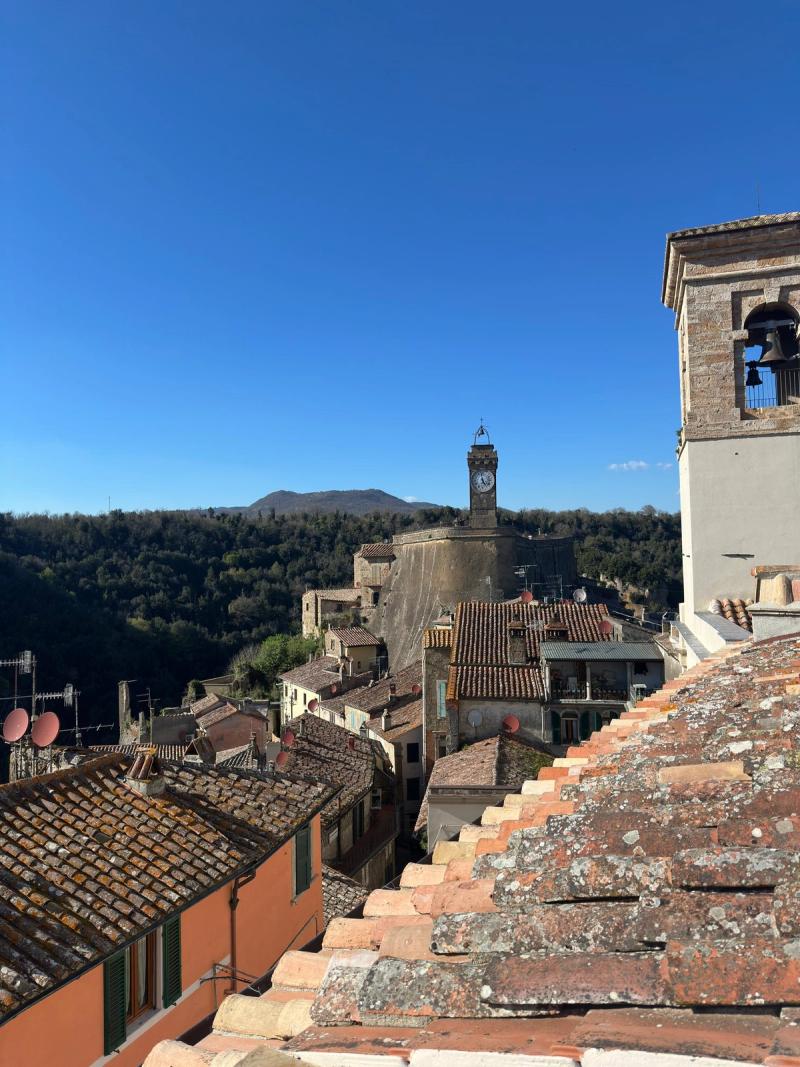
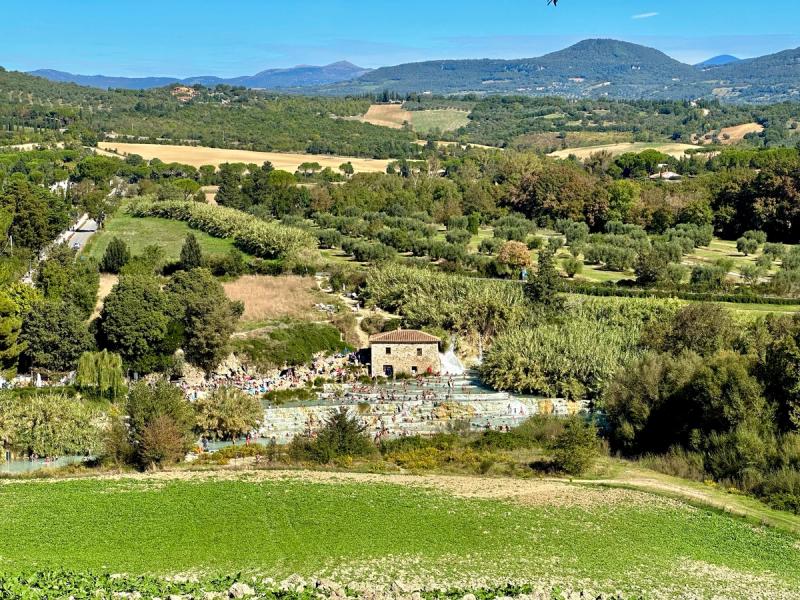
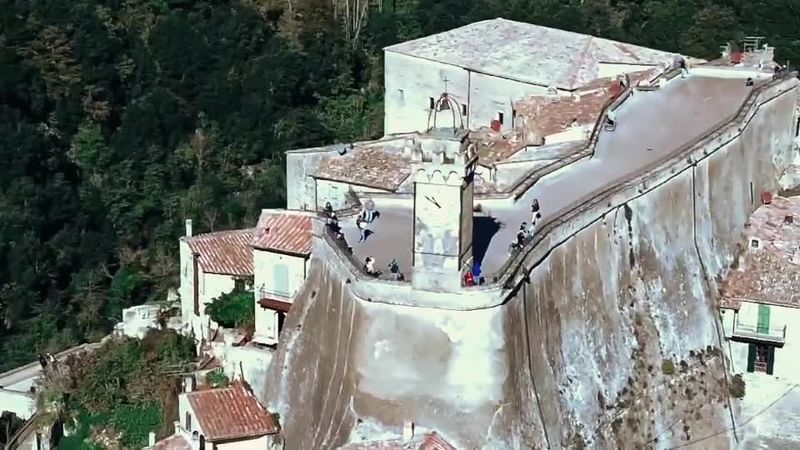
Sorano is covered in full in a dedicated post. The short version: it sits on a tuff cliff above the Lente gorge, directly between Pitigliano and Sovana, and it receives fewer visitors than either. The Orsini Fortress houses the local archaeological museum. The Masso Leopoldino, a stabilised promontory at the top of the village, has the best panoramic view in the area. The Via Cava di San Rocco, the most accessible entry point into the Etruscan road network, starts just below the village walls. The village has its own thermal baths, open year-round, a short distance from the historic centre.
Most visitors to the Città del Tufo come for Pitigliano and pass through Sorano briefly. That tends to be the wrong ratio. For a full guide, including the churches, the thermal baths, restaurants, the Vie Cave walk, and getting-there logistics, see The Complete Guide to Sorano.
How to visit all three
All three towns are within 15 kilometres of each other. Sorano to Pitigliano is about 10 minutes by car. Sorano to Sovana is about 15 minutes. Sovana to Pitigliano is about 20 minutes.
A full day makes it possible to cover the main sights in all three. A practical order: start in Sovana when the necropolis opens at 10:00, allow two hours for the site and the village centre, then drive to Sorano for the Orsini Fortress and the view from the Masso Leopoldino, then finish in Pitigliano for the late afternoon. La Piccola Gerusalemme and the museums in Pitigliano close by early evening. Pitigliano also has the most options for dinner.
Two days is more comfortable. It allows time for the Vie Cave walk out of Sorano, a proper visit to La Piccola Gerusalemme, and the necropolis with the guided tour rather than on your own. The combined Città del Tufo ticket makes more sense over two days.
A car is essential. There is no practical public transport connecting the three towns. Here is how to get to Sorano.
Parking in Pitigliano is outside the historic walls; the centre is pedestrian. In Sorano and Sovana, parking close to the centre is generally straightforward outside of August.
Where to stay
All three towns can be seen as day trips from within the area, but the experience changes when you stay inside the Città del Tufo rather than driving in from somewhere else.
Palazzo Palloni is a historic building in the upper part of Sorano, with two restored apartments: the Boutique Apartment for couples and Piano Nobile for groups of up to six. The property has been in the same family for generations. Pitigliano is ten minutes from the door. Sovana is fifteen. Mario will meet you when you arrive.
Staying in Sorano? Book direct at Palazzo Palloni and save 20%. [Book direct.](/book-direct)